


Colours of the seasons: near and far in a landscape


 About this lesson
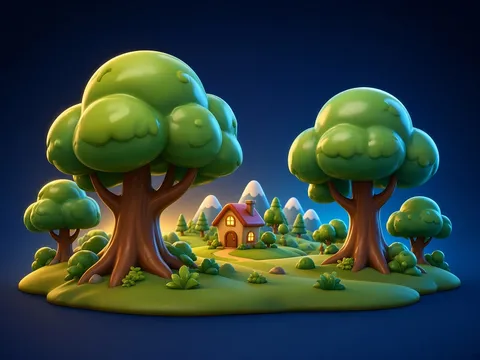
A landscape is a picture of nature. The horizon line is where the sky meets the land. Near trees are big and low on the page, a far-off house is small and in the middle, and mountains are smallest, on the horizon. Far things are paler; near things are brighter. Choose colours by season: spring light green, summer bright, autumn yellow and orange, winter white and blue.
 What the book shows

In art lessons the child explores colour, line and shape, draws and creates patterns. Look at the textbook examples, then make your own work.
Textbook link:
This is not the textbook’s text but a short description of the topic. Check the exact page in your own textbook.
 The lesson step by step
- 1
Warm-up5 min
Look out of the window.
- 2
New topic10 min
Horizon, near and far.
- 3
Practice10 min
Landscape plan.
- 4
Game10 min
“Guess the season” game.
- 5
Wrap-up5 min
Season landscape.
 Let’s understand
For the student Simple language
| Plane | Where | How |
|---|---|---|
| 🌳 near | low on the page | big, bright |
| 🏠 middle | in the middle | smaller |
| ⛰️ far | on the horizon | smallest, pale |
 For the parent
How to help
- Look out of a window together: what is near, what is far?
- Hold up a finger and compare it with a distant house.
 For the teacher
 Lesson goals
- Build a landscape with a horizon line: near things big and low, far things small and higher up; choose the season’s colours.
How to teach it
- Observation, drawing, colour mixing, a class display
 Differentiation
- Weaker pupils colour a ready outline; stronger pupils create their own composition
 Questions for the class
- How do we draw near and far things in a landscape?
 How to check
The pupil draws a three-plane landscape with the right season colours.
 Scientific Scientific language
Why do far things look small?
The further away something is, the smaller it looks. A distant mountain can look smaller than your finger.
Air haze
There is lots of air between us and far things, so they look bluish and pale.
Self-study
Step by step
- Draw the horizon.
- Far: small, pale, higher.
- Near: big, bright, lower.
- Pick the season’s colours.
Going deeper
 Scientific language: for older students, parents and teachers.
A low horizon gives more sky; a high one gives more land. The artist chooses depending on what matters most.
 Play and check
Near or far?
 How to write it down
- Draw a horizon and a landscape for one season: a tree near, a house in the middle, mountains far away.
How the classwork looks in the notebook
Sample: the date and heading follow this country’s notebook rules.
 Watch out: common mistakes
 Where it helps in life
- Perspective: a road going into the distance
- Famous landscape painters
 At home
Core
- Paint the same landscape in two seasons (summer and winter).
Extra ⭐
- Draw a road going away: wide near, narrow far.
How to do it
- Prepare a quiet spot and materials.
- Show your work to a grown-up and explain it.
Answers for parents
Summer: green trees, blue sky, bright sun. Winter: white ground, bare branches, grey-blue sky. The road narrows almost to a point at the horizon.
Step-by-step homework solution — Show the solution (try it yourself first)
Plan
- A winter scene: horizon halfway, white mountains far away, a snowy house in the middle, a big tree and a snowman up close.
How the homework looks in the notebook
Sample: the date and heading follow this country’s notebook rules.

 About cookies