


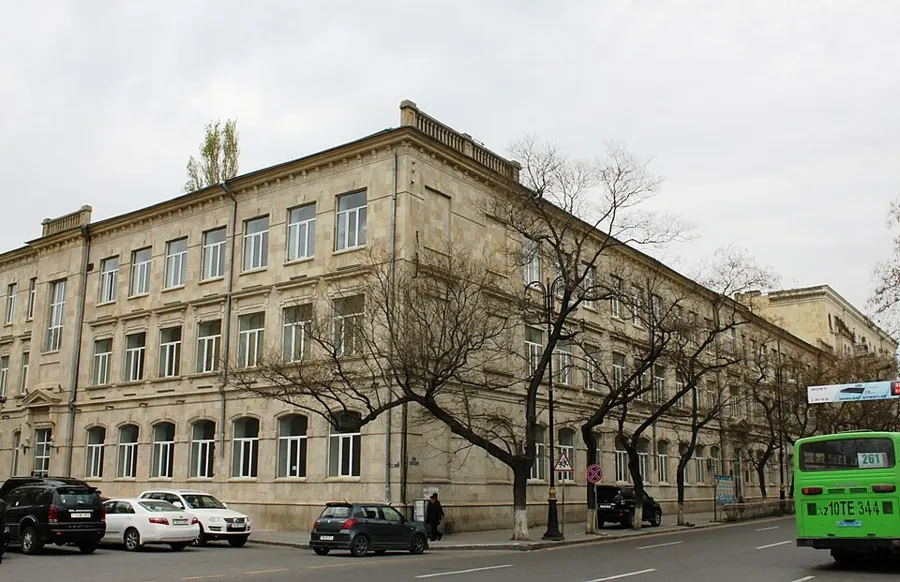
A pupil’s school day around the world
Azerbaijan
How a pupil gets to school, what the classroom and timetable are like, what is taught and by whom, what they wear, what goes in the bag, and how they prepare and spend time after school.
How children get to school
- A first-grader is usually brought to school and collected by a parent or an older family member.
- In cities children often walk to the nearest school; if it is far, they come by bus, metro or family car.
- Learn the route together: traffic lights, the crossing, and the “I don’t go with strangers” rule.
A typical school day
 Arriving at school; many schools run two shifts, so a child may study in the morning or the afternoon.
 Lessons are taught subject by subject; in the primary grades one class teacher teaches the main subjects.
 There are breaks between lessons; in grade 1 lessons are usually shorter and lighter.
 The teacher records homework and marks in the pupil’s diary or the electronic journal.
The classroom
The class has its own room: desks for two in rows, a board at the front (an interactive one in many schools). The alphabet, numbers and class rules hang on the walls. PE is in the gym; music and computing are sometimes in separate rooms.
Timetable and hours
Many schools run two shifts: a child studies in the morning or the afternoon shift. There are breaks between lessons, and the daily load is lighter in grade 1.
An example day (varies by school)
- Lesson 1 · Azerbaijani language
- Lesson 2 · Maths
- Long break
- Lesson 3 · Life knowledge
- Lesson 4 · Music or PE
Grade 1: hours per week (official plan)
| Subject | Hours |
|---|---|
| Azerbaijani language | 8 |
| English | 1 |
| Mathematics | 5 |
| Computer science | 1 |
| Life knowledge | 1 |
| Technology | 1 |
| Visual arts | 1 |
| Music | 1 |
| Physical education | 2 |
| Total | 21 |
What is taught and who teaches it
In primary grades (1–4) one class teacher teaches the main subjects — Azerbaijani, maths and life knowledge. English, music, PE and sometimes computing are taught by subject teachers. The class teacher is also the parents’ main contact.
Uniform and clothing
State schools have a school uniform. The colour, style and details are set by each school, so ask the class teacher for the exact rules.
On PE days children bring sports clothes and trainers separately. For celebrations such as Knowledge Day children usually dress more formally.
What to pack
Before school
- Pack the bag the evening before using tomorrow’s timetable, and lay out the uniform.
- Have breakfast and leave on time; know when your shift starts.
- Check the diary for a note from the teacher.
After school
- A short rest and a meal, then homework, starting with the hardest subject.
- Look at the marks and notes in the diary together.
- Clubs, sport, time outdoors; less screen time before bed.
After school: preparation and activities
- Preparation: after rest and a meal, homework, then pack the bag for tomorrow.
- Reading: read a little together every day.
- Clubs: sport, chess, dance, music, art — at school, in children’s creativity centres or sports schools.
- Some families add extra lessons with a teacher; in grade 1 the main thing is a good habit without tiredness.
What your child needs today
Every lesson page starts with a “For this lesson you need” box: check it and pack the bag the evening before.
These pages are general descriptions: each school sets its own timetable and dress rules.
 About cookies