


The rise of feudal relations in Azerbaijan


 About this lesson
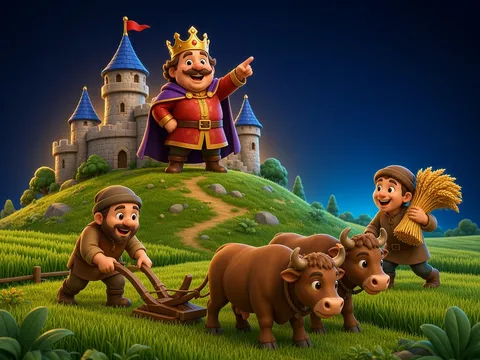
In ancient times most land belonged to village communities, and slaves were also used for heavy work. But slave labour was inefficient: a slave had no interest in the results. In the 3rd–5th centuries AD new relations took shape in Azerbaijan, in Albania and Atropatene. Land increasingly gathered in the hands of great landowners — feudal lords. They received land from the ruler in return for service, above all military service, and it later passed down by inheritance. Peasants of the communities lost their land and became dependent on the lords: they worked the lord’s land, handed over part of the harvest as a tax, and performed duties — labouring on the lord’s fields and helping build roads and fortresses. Social relations based on a lord’s ownership of land and of the peasants who depend on him are called feudal relations. In Albania the nobles were called “azats” (free men, nobility) and dependent peasants “shinakans”. At the top of society stood the ruler, then the great lords, then the lesser lords. As Christianity spread, the church also became a great landowner: villages were granted to it and clergy were freed from taxes. Craftsmen and merchants lived in the towns and paid taxes too. Feudal relations remained Azerbaijan’s main social order throughout the Middle Ages.
 What the book shows

In grade 6 the History of Azerbaijan course starts with key historical ideas and units of time, then covers primitive society, the first states, Manna, Atropatene and Albania, the rise of feudal relations and the Sasanian period. Read the topic in the textbook, look at the maps and pictures, and put the dates on a timeline.
Textbook link:
This is not the textbook’s text but a short description of the topic. Check the exact page in your own textbook.
 The lesson step by step
- 1
Warm-up5 min
A castle above working fields.
- 2
New topic10 min
From slaves to dependent peasants.
- 3
Practice10 min
The layers of feudal society.
- 4
Game10 min
Taxes, duties and the church.
- 5
Wrap-up5 min
Analysing causes.
 Let’s understand
For the student Simple language
| Group | Who | Role |
|---|---|---|
| ruler | head of the country | grants land |
| lords (azats) | great landowners | military service |
| clergy | church leaders | church lands, tax-free |
| peasants (shinakans) | dependent farmers | taxes and duties |
| craftsmen, merchants | townspeople | crafts, trade, taxes |
 For the parent
How to help
- Discuss together: if all the land belonged to one person, how would everyone else live? Is that fair?
 For the teacher
 Lesson goals
- Explain what feudal relations are, know why and when they arose in Azerbaijan, tell the main social groups apart (feudal lords, dependent peasants, craftsmen, clergy), and describe taxes and duties.
How to teach it
- Working with sources and maps, timelines, discussion, mini-project
 Differentiation
- Weaker pupils work with key dates and pictures; stronger pupils compare sources and write their own conclusion
 Questions for the class
- Does whoever owns the land also hold the power?
 How to check
The pupil explains what feudal relations are, why and when they arose, tells the social groups apart, and describes taxes and duties.
 Scientific Scientific language
Plough and oxen
An iron-tipped plough pulled by oxen allowed deeper ploughing and bigger harvests.
Irrigation
Man-made irrigation channels were very important for farming.
Self-study
Step by step
- I explained feudal relations.
- I know why they arose.
- I told the social groups apart.
- I described taxes and duties.
Going deeper
 Scientific language: for older students, parents and teachers.
The word “feudal” comes from “feud” (fief) — land granted in return for service in medieval Europe.
 Play and check
Who does it describe?
 How to write it down
- Draw a ladder diagram of feudal society, from ruler to peasant.
- Write 3 differences between a slave and a dependent peasant.
- Explain the words “azats” and “shinakans”.
How the classwork looks in the notebook
Sample: the date and heading follow this country’s notebook rules.
 Watch out: common mistakes
 Where it helps in life
- Azerbaijan under the Sasanian Empire
 At home
Core
- Write “my year” as a dependent peasant (6–8 sentences).
Extra ⭐
- Why do you think the church became a great landowner? Write 3 sentences.
How to do it
- Put the dates on a timeline.
- Retell the topic to a grown-up.
Answers for parents
A slave is the owner’s property, owns nothing and has no stake in the results; a dependent peasant has a family, home and tools, works the land and keeps part of the harvest, so works better. Azats — nobles, feudal lords; shinakans — dependent peasants.
Step-by-step homework solution — Show the solution (try it yourself first)
Let’s find the causes
- Why did slave labour give way to dependent peasants? 1) A slave had no stake in the results and often worked badly. 2) A peasant kept part of the harvest and so worked well. 3) Rulers needed loyal warriors — granting them land brought strong lords into the army.
How the homework looks in the notebook
Sample: the date and heading follow this country’s notebook rules.

 About cookies