


Samad Behrangi, “The Little Black Fish”


 About this lesson
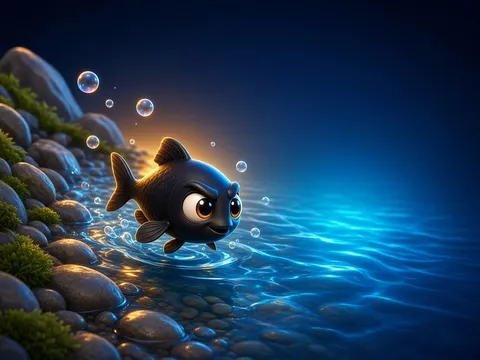
Samad Behrangi, born in 1939 in Tabriz, was an Azerbaijani writer, teacher and folklore collector. He taught village children and wrote tales and stories for them; he died young, drowning in the Araz river. His best-known work is “The Little Black Fish”. It is a tale within a tale: on a winter night at the bottom of the sea, an Old Fish tells her twelve thousand children and grandchildren the story of the Little Black Fish. The Little Black Fish lives with her mother in a small stream but wants to know where the stream goes and what the world is like. Though her mother and neighbours try to scare her into staying, she sets off. On the way she meets various characters: a Crab tries to trick her, while a Lizard gives her wise advice and a dagger to use in danger. She helps fish trapped in a pelican’s pouch and cuts her way out with the dagger. At last she reaches the sea, but a heron swallows her. Inside, she saves a small crying fish and destroys the heron; her own fate remains unknown. When the Old Fish finishes, everyone falls asleep except the Little Red Fish, who lies awake till morning thinking about the sea. The story is an allegory: the stream is a narrow, unchanging life, the sea is freedom and knowledge, and the Little Black Fish is a brave seeker. The main idea: life’s meaning lies not in running from fear but in seeking the truth and being useful to others. The heroine says what matters is how her life or death will affect the lives of others.
 What the book shows

The grade 6 literature textbook includes folk literature (epics, legends), stories and poems by Azerbaijani and world writers, extracts from novels, and lessons on writing compositions and essays. Read the work in the textbook first, note the events and characters, then answer the questions and give reasons for your opinion.
Textbook link:
This is not the textbook’s text but a short description of the topic. Check the exact page in your own textbook.
 The lesson step by step
- 1
Warm-up5 min
A fish swimming from stream to sea.
- 2
New topic10 min
The writer and the structure.
- 3
Practice10 min
The journey and the characters.
- 4
Game10 min
Symbols and idea.
- 5
Wrap-up5 min
Analysing the ending.
 Let’s understand
For the student Simple language
| Character | What it does | Symbolises |
|---|---|---|
| Little Black Fish | sets out to see the world | courage, seeking |
| the Crab | tries to trick her | deceit |
| the Lizard | gives advice and a dagger | wisdom, help |
| the heron | swallows fish | oppression, danger |
| the sea | the journey’s end | freedom, knowledge |
 For the parent
How to help
- Talk together: like the Little Black Fish, what would you most like to discover or see?
 For the teacher
 Lesson goals
- Know the basics about Samad Behrangi, retell the events in order, explain the Little Black Fish’s character and what the characters symbolise, and state the main idea.
How to teach it
- Expressive reading, text questions, character analysis, reading in parts, creative writing
 Differentiation
- Weaker pupils retell with a plan and key words; stronger pupils write their own text
 Questions for the class
- Is a safe but narrow life better, or a risky but exciting search?
 How to check
The pupil talks about the author, retells events in order, explains the symbols and states the idea.
 Scientific Scientific language
Real nature
Streams flow into rivers, and rivers into the sea.
The pelican
A pelican catches fish in the skin pouch under its beak.
Self-study
Step by step
- I talked about the author.
- I retold the events.
- I explained the symbols.
- I stated the idea.
Going deeper
 Scientific language: for older students, parents and teachers.
“The Little Black Fish” has been translated into many languages and is widely known in children’s literature.
 Play and check
What does it symbolise?
 How to write it down
- Draw the Little Black Fish’s journey as a map — stream → river → sea — and mark whom she meets.
- Write three adjectives for her character and back each with an event.
- Explain the “tale within a tale” structure.
How the classwork looks in the notebook
Sample: the date and heading follow this country’s notebook rules.
 Watch out: common mistakes
 Where it helps in life
- Nature’s beauty in poems and stories
 At home
Core
- Write a continuation as the Little Red Fish: what did she decide in the morning? (6–8 sentences)
Extra ⭐
- How could the Lizard’s advice help you today? Explain.
How to do it
- Read the work aloud.
- Copy your favourite part and explain why you chose it.
Answers for parents
Journey: stream (mother, neighbours) → Crab, Lizard → river (pelican) → sea (shoal of fish, heron). Adjectives: brave (sets off), clever (tricks the heron), kind (saves the small fish). Structure: the Little Black Fish’s story sits inside the tale the Old Fish tells.
Step-by-step homework solution — Show the solution (try it yourself first)
Let’s analyse
- Why can’t the Little Red Fish sleep at the end? The tale has stirred a question in her: she too wants to know the sea and the world. So the Little Black Fish’s journey does not end — her courage passes to someone else. That is the writer’s main point.
How the homework looks in the notebook
Sample: the date and heading follow this country’s notebook rules.

 About cookies