


Asking permission and making offers: can


 About this lesson
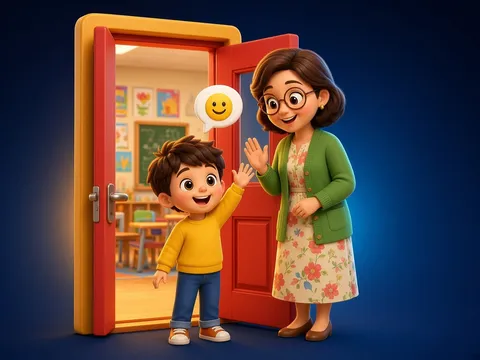
Can is used not only for ability but also for permission and offers. To ask permission: Can I + verb? — Can I open the window? Can I borrow your pen? More polite: Could I…? or May I…? — May I come in? To give permission: Yes, you can. / Sure. / Of course. / Go ahead. To refuse: No, you can’t. / Sorry, you can’t. It is polite to give a reason: Sorry, you can’t. The baby is sleeping. To offer: Can I help you? Can I carry your bag? Replies: Yes, please. That’s very kind of you. / No, thank you. I’m fine. To ask someone else: Can you…? / Could you…, please? — Could you close the door, please? Rule: after can the verb has no to and no -s: He can go (not “He cans goes”). Negative: can’t (cannot).
 What the book shows

In grade 6 pupils ask for permission and make offers, talk and write about the past, describe what they could do in the past, link two past actions, and join ideas with linking words. Each lesson has a grammar pattern, a word bank, a dialogue and a short piece of writing.
Textbook link:
This is not the textbook’s text but a short description of the topic. Check the exact page in your own textbook.
 The lesson step by step
- 1
Warm-up5 min
At the classroom door: May I come in?
- 2
New topic10 min
Asking permission.
- 3
Practice10 min
Offers and requests.
- 4
Game10 min
Replies: yes and no.
- 5
Wrap-up5 min
Role play.
 Let’s understand
For the student Simple language
| Purpose | Question | Answer |
|---|---|---|
| permission | Can I use your phone? | Sure. / Sorry, you can’t. |
| polite permission | May I come in? | Of course. |
| offer | Can I help you? | Yes, please. / No, thank you. |
| request | Could you open the door, please? | Yes, of course. |
 For the parent
How to help
- Several times a day, ask your child to ask permission in English: Can I watch TV? May I have some water?
 For the teacher
 Lesson goals
- Ask for and give permission with can, offer help, use could for polite requests, and choose phrases to agree or politely refuse.
How to teach it
- Listening, reading, pair dialogues, role play, storytelling, short writing
 Differentiation
- Weaker pupils: a ready pattern and word bank; stronger pupils: an 8–10 sentence text
 Questions for the class
- How do we ask permission politely?
 How to check
The pupil asks permission with can/may, offers help, makes requests with could, and agrees or refuses politely.
 Scientific Scientific language
Politeness
Please and thank you matter a lot in English; ending a request with please is polite.
May
May I…? is the most formal; use it with teachers and adults.
Self-study
Step by step
- I asked permission.
- I offered help.
- I made a polite request.
- I refused politely.
Going deeper
 Scientific language: for older students, parents and teachers.
Can I…? is common in everyday speech, while May I…? sounds more formal.
 Play and check
What is this sentence?
 How to write it down
- Write 4 permission questions for class.
- Write 3 offers of help to an elderly neighbour.
- Write a polite refusal with a reason.
How the classwork looks in the notebook
Sample: the date and heading follow this country’s notebook rules.
 Watch out: common mistakes
 Where it helps in life
- Past Simple of be: was / were
 At home
Core
- Write a 6-line dialogue between a shop assistant and a customer (Can I help you?…).
Extra ⭐
- Write 5 requests you use at home in English.
How to do it
- Read the sentences aloud.
- Read what you wrote to a grown-up.
Answers for parents
Example: — Can I help you? — Yes, please. Can I try on this jacket? — Sure. The fitting room is over there. — Thank you. Could you bring a smaller size, please? — Of course.
Step-by-step homework solution — Show the solution (try it yourself first)
Role play
- At the library: — Excuse me, can I borrow this book? — Yes, you can. You can keep it for two weeks. — Can I take two books? — Sorry, you can’t. Only one book at a time. — OK. Thank you! Now swap roles with a partner.
How the homework looks in the notebook
Sample: the date and heading follow this country’s notebook rules.

 About cookies