


Past ability: could


 About this lesson
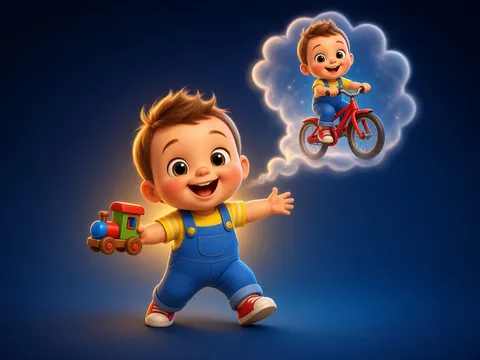
Can shows ability now: I can swim. Could shows ability in the past: When I was five, I could ride a bike. Could is the same for every person: I could, she could, they could. The verb after it is in the base form, with no to: He could read (not “could to read”). Negative: could not = couldn’t — When I was three, I couldn’t write. Question: Could you swim when you were six? Yes, I could. / No, I couldn’t. It often goes with when I was…, at the age of…, two years ago. Compare: Last year I couldn’t play the guitar, but now I can. Note: Could you…, please? is also a polite request (from the last lesson) — the context shows which meaning is meant.
 What the book shows

In grade 6 pupils ask for permission and make offers, talk and write about the past, describe what they could do in the past, link two past actions, and join ideas with linking words. Each lesson has a grammar pattern, a word bank, a dialogue and a short piece of writing.
Textbook link:
This is not the textbook’s text but a short description of the topic. Check the exact page in your own textbook.
 The lesson step by step
- 1
Warm-up5 min
A childhood photo.
- 2
New topic10 min
can and could.
- 3
Practice10 min
Negatives and questions.
- 4
Game10 min
when I was…
- 5
Wrap-up5 min
Interview.
 Let’s understand
For the student Simple language
| Time | Positive | Negative |
|---|---|---|
| now | I can swim. | I can’t dive. |
| past | I could walk at one. | I couldn’t read at three. |
| question | Could you ride a bike at five? | Yes, I could. / No, I couldn’t. |
 For the parent
How to help
- Talk together: what could and couldn’t you do as a child? When I was ten, I could…
 For the teacher
 Lesson goals
- Express past ability with could / couldn’t, compare can and could, ask Could you…? questions, and talk about childhood abilities with when I was…
How to teach it
- Listening, reading, pair dialogues, role play, storytelling, short writing
 Differentiation
- Weaker pupils: a ready pattern and word bank; stronger pupils: an 8–10 sentence text
 Questions for the class
- What could you do when you were little?
 How to check
The pupil talks about past ability with could/couldn’t, compares it with can, and asks and answers Could you…? questions.
 Scientific Scientific language
Growing up
Many children start walking around their first birthday, but every child has their own pace.
The brain
Learning a new skill builds new connections in the brain.
Self-study
Step by step
- I said what I could do.
- I made negatives with couldn’t.
- I asked Could you…?
- I compared can and could.
Going deeper
 Scientific language: for older students, parents and teachers.
For one specific success in the past we use was able to: The fire was big, but everyone was able to escape.
 Play and check
Can or could?
 How to write it down
- Write 3 could and 3 couldn’t sentences about your childhood.
- Write 3 “Could you… when you were…?” questions for a family member.
- Write a “couldn’t then, can now” sentence.
How the classwork looks in the notebook
Sample: the date and heading follow this country’s notebook rules.
 Watch out: common mistakes
 Where it helps in life
- Past Continuous and Past Simple
 At home
Core
- Ask a grandparent what they could do as a child and write 5 sentences: When my grandma was ten, she could…
Extra ⭐
- Write 3 sentences: Last year I couldn’t…, but now I can…
How to do it
- Read the sentences aloud.
- Read what you wrote to a grown-up.
Answers for parents
Example: When I was three, I could run but I couldn’t read. When I was six, I could write my name. Last year I couldn’t swim, but now I can.
Step-by-step homework solution — Show the solution (try it yourself first)
Interview
- — Could you read when you were five? — No, I couldn’t. But I could count to twenty. — Could you swim? — Yes, I could. My dad taught me. Interview a partner like this and write 3 sentences: Leyla could swim at five.
How the homework looks in the notebook
Sample: the date and heading follow this country’s notebook rules.

 About cookies