


Legends


 About this lesson
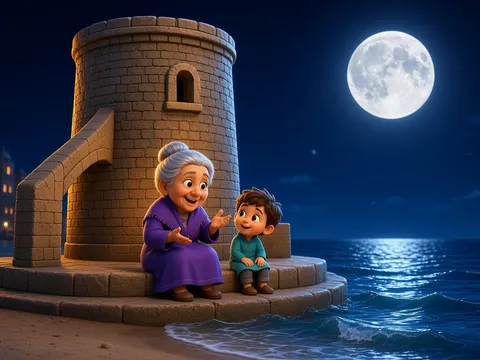
A legend is a short prose work created by the people and passed on by word of mouth. It often explains how a place got its name, or how a mountain, lake, bird or historic building came to be. A legend has a real place or monument, but its events may be miraculous or invented. For example, the Maiden Tower in Baku is a real monument, and there are several different folk legends about how it got its name. Legends are also told about Goygol, Agsu and Sheki. A legend has no known author; the people created it, so one legend often has several versions. Legend versus folk tale: a tale starts “once there was and once there wasn’t”, its place and time are vague and it usually ends happily; a legend has a definite place or object, often ends sadly, and listeners tend to believe it happened.
 What the book shows

In grade 5 literature lessons pupils learn that literature is the art of words and meet folk literature (legends, tales), poems, fables, short stories and classical poetry. Read the work in the textbook first, then answer the questions and write your own opinion.
Textbook link:
This is not the textbook’s text but a short description of the topic. Check the exact page in your own textbook.
 The lesson step by step
- 1
Warm-up5 min
The Maiden Tower by moonlight.
- 2
New topic10 min
What is a legend?
- 3
Practice10 min
Real and invented.
- 4
Game10 min
Legend and folk tale.
- 5
Wrap-up5 min
Creating our own legend.
 Let’s understand
For the student Simple language
| Legend | Folk tale | |
|---|---|---|
| Place | a real place | vague |
| Purpose | explains an origin | entertains and teaches |
| Ending | often sad | usually happy |
 For the parent
How to help
- If you know a legend about your town or village name, tell it to your child; if not, ask older relatives together.
 For the teacher
 Lesson goals
- Know that a legend is a folk genre that usually explains how a place, a natural feature or a monument came to be, separate the real from the invented, and tell a legend from a folk tale.
How to teach it
- Expressive reading, text questions, character analysis, reading in parts, creative writing
 Differentiation
- Weaker pupils retell with a plan and key words; stronger pupils write their own text
 Questions for the class
- How did people explain where places and monuments came from?
 How to check
The pupil recognises a legend, tells it from a tale, separates real from invented and retells it.
 Scientific Scientific language
Why so many versions?
Legends were told, not written, and each teller changed a little.
Collectors
Folklorists visit villages, write legends down and publish them.
Self-study
Step by step
- I explained what a legend is.
- I separated real from invented.
- I told a legend from a tale.
- I retold a legend.
Going deeper
 Scientific language: for older students, parents and teachers.
The Maiden Tower, together with the Old City (Icherisheher) and the Shirvanshahs’ Palace, is on UNESCO’s World Heritage List.
 Play and check
Legend or folk tale?
 How to write it down
- Write a 4-point plan of a legend.
- List what is real and what is invented in two columns.
How the classwork looks in the notebook
Sample: the date and heading follow this country’s notebook rules.
 Watch out: common mistakes
 Where it helps in life
- Folk tales
 At home
Core
- Listen to a legend from your family and write it briefly (5–6 sentences).
Extra ⭐
- Invent your own legend: how did a tree near your school or a street get its name?
How to do it
- Read the work aloud.
- Copy your favourite part and explain why you chose it.
Answers for parents
Check: the legend has a definite place, explains its name or origin and may include a miraculous element.
Step-by-step homework solution — Show the solution (try it yourself first)
Think
- A legend may say a lake was formed from a girl’s tears, while geography explains it by a landslide or river water collecting. A legend is not a scientific explanation but an expression of people’s feelings and imagination.
How the homework looks in the notebook
Sample: the date and heading follow this country’s notebook rules.

 About cookies