


Improper fractions and mixed numbers


 About this lesson
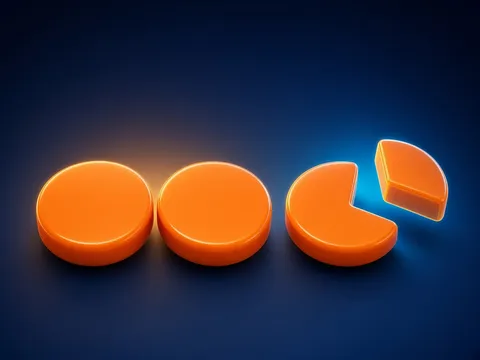
A fraction whose numerator is smaller than its denominator is proper: 3/4, 5/8; it is less than 1. A fraction whose numerator equals or is bigger than its denominator is improper: 4/4, 7/4, 9/5; it is 1 or more. A whole number together with a proper fraction is a mixed number: 1 3/4 (“one and three quarters”). To turn an improper fraction into a mixed number, divide the numerator by the denominator with a remainder: the quotient is the whole part, the remainder is the new numerator, and the denominator stays the same. 7/4: 7 ÷ 4 = 1 remainder 3 → 1 3/4. 17/5: 17 ÷ 5 = 3 remainder 2 → 3 2/5. To turn a mixed number into an improper fraction, multiply the whole part by the denominator and add the numerator, keeping the denominator: 2 1/3 = (2 · 3 + 1)/3 = 7/3. On a number line a mixed number lies between two whole numbers: 1 3/4 is between 1 and 2, nearer 2. Mixed numbers are common in daily life: 1 1/2 hours, 2 1/4 litres.
 What the book shows

In the grade 5 maths textbook a topic usually comes with a real-life example, a rule, a worked example and tasks of different difficulty. Read the example carefully, say the rule in your own words, then solve the tasks in your notebook and check the answer.
Textbook link:
This is not the textbook’s text but a short description of the topic. Check the exact page in your own textbook.
 The lesson step by step
- 1
Warm-up5 min
Two circles and three quarters.
- 2
New topic10 min
Proper and improper fractions.
- 3
Practice10 min
Converting to mixed numbers.
- 4
Game10 min
Converting back.
- 5
Wrap-up5 min
On the number line.
 Let’s understand
For the student Simple language
| Improper | Division | Mixed |
|---|---|---|
| 7/4 | 7 : 4 = 1 (3) | 1 3/4 |
| 11/3 | 11 : 3 = 3 (2) | 3 2/3 |
| 17/5 | 17 : 5 = 3 (2) | 3 2/5 |
| 9/2 | 9 : 2 = 4 (1) | 4 1/2 |
 For the parent
How to help
- Look for mixed numbers in recipes or times (1 1/2 cups, 2 1/4 hours) and convert them to improper fractions together.
 For the teacher
 Lesson goals
- Tell proper and improper fractions apart, write an improper fraction as a mixed number and back again, and show them on a number line.
How to teach it
- Modelling, worked examples, pair problem-solving, estimating and checking, independent work
 Differentiation
- Weaker pupils work step by step from a model; stronger pupils solve multi-step problems and write their own
 Questions for the class
- How can we write a fraction bigger than one whole?
 How to check
The pupil tells proper and improper fractions apart, converts between improper fractions and mixed numbers, and shows them on a number line.
 Scientific Scientific language
The circle model
2 whole circles and 3/4 of a circle make 2 3/4, which is 11/4 in quarters.
A fraction is a division
The fraction bar means divide: 7/4 = 7 ÷ 4.
Self-study
Step by step
- I sorted proper and improper fractions.
- I turned an improper fraction into a mixed number.
- I turned a mixed number into a fraction.
- I showed it on a number line.
 Terms in this lesson
Tap an underlined word — its meaning opens in the glossary.
- Fraction
- Equal parts of a whole: a/b.
- Numerator
- The top number — how many parts are taken.
- Denominator
- The bottom number — how many parts in the whole.
- Mixed number
- A whole part + a fraction: 2 ¾.
- Remainder
- What is left after dividing; smaller than the divisor.
- Mean
- The sum of the numbers divided by how many there are.
- Volume
- The space a solid fills; in cubic units: cm³.
Going deeper
 Scientific language: for older students, parents and teachers.
In some countries measurements are still written as mixed numbers, such as tool sizes given in fractions of an inch.
 Play and check
What kind of fraction is it?
 How to write it down
- Convert to mixed numbers: 13/4, 22/5, 15/2.
- Convert to improper fractions: 3 1/4, 2 5/6, 4 2/3.
- Show 1 1/2 and 2 3/4 on a number line.
How the classwork looks in the notebook
Sample: the date and heading follow this country’s notebook rules.
 Watch out: common mistakes
 Where it helps in life
- Finding a fraction of a number
 At home
Core
- Find 3 measurements at home given as mixed numbers (time, volume, length) and convert them to fractions.
Extra ⭐
- Convert 29/6 and 5 3/8.
How to do it
- Solve the tasks in your notebook.
- Check each answer by estimating or with the inverse operation.
Answers for parents
13/4 = 3 1/4; 22/5 = 4 2/5; 15/2 = 7 1/2. 3 1/4 = 13/4; 2 5/6 = 17/6; 4 2/3 = 14/3. Homework: 29/6 = 4 5/6; 5 3/8 = 43/8.
Step-by-step homework solution — Show the solution (try it yourself first)
Let’s solve
- Mum made 11 quarter-litre glasses of juice. How many litres is that? 11/4 = 11 ÷ 4 = 2 remainder 3 = 2 3/4 litres — more than 2 litres but less than 3.
How the homework looks in the notebook
Sample: the date and heading follow this country’s notebook rules.

 About cookies