


Azerbaijan in the 7th–4th centuries BC


 About this lesson
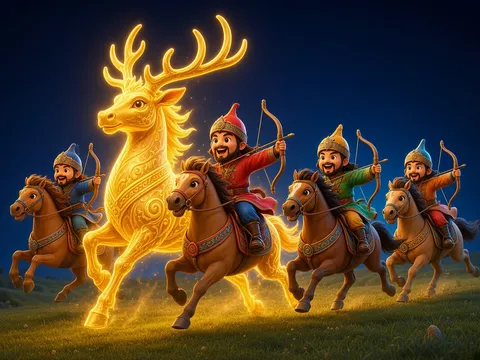
In the 7th century BC nomadic Scythian tribes came into Azerbaijani lands from the north, through the Caucasus passes. Skilled horsemen and archers, they settled between the Kur and Araz rivers and in southern lands and formed the Scythian kingdom. Scythian gold and bronze ornaments in the “animal style” are famous. At the same time Media grew strong south-east of Lake Urmia, with its capital at Ecbatana (today’s Hamadan). Media helped bring down Assyria and in the early 6th century BC absorbed Manna and the lands of the Scythian kingdom. In 550 BC the Persian king Cyrus II seized Media, creating the vast Achaemenid Empire, which now included Azerbaijani lands. The Achaemenids divided their realm into satrapies — provinces run by satraps appointed by the king, who collected taxes and raised troops. Under Darius I the empire became even more centralised. In the 4th century BC the Achaemenids weakened. Alexander the Great marched east and in 331 BC defeated Darius III at the Battle of Gaugamela. Warriors from Media and from northern Azerbaijani lands fought in the Achaemenid army there, and the Median troops were led by the satrap Atropates. The Achaemenid Empire fell, and Atropates soon founded an independent state — Atropatene.
 What the book shows

In grade 6 the History of Azerbaijan course starts with key historical ideas and units of time, then covers primitive society, the first states, Manna, Atropatene and Albania, the rise of feudal relations and the Sasanian period. Read the topic in the textbook, look at the maps and pictures, and put the dates on a timeline.
Textbook link:
This is not the textbook’s text but a short description of the topic. Check the exact page in your own textbook.
 The lesson step by step
- 1
Warm-up5 min
Riders galloping across the steppe.
- 2
New topic10 min
The Scythians.
- 3
Practice10 min
Media and the Achaemenids.
- 4
Game10 min
Alexander and Gaugamela.
- 5
Wrap-up5 min
A cause-and-effect chain.
 Let’s understand
For the student Simple language
| When | Event |
|---|---|
| 7th century BC | Scythians arrive; Scythian kingdom |
| 7th–6th centuries BC | Media rises, absorbs Manna |
| 550 BC | Cyrus II — Achaemenid Empire |
| 331 BC | Battle of Gaugamela |
| late 4th century BC | Atropates — an independent state |
 For the parent
How to help
- Draw a timeline together: which states followed one another from the 7th to the late 4th century BC?
 For the teacher
 Lesson goals
- Tell the main events of the 7th–4th centuries BC in order — the Scythian kingdom, Media, the Achaemenid Empire and Alexander’s campaigns — and explain the satrapy system and the period’s outcomes.
How to teach it
- Working with sources and maps, timelines, discussion, mini-project
 Differentiation
- Weaker pupils work with key dates and pictures; stronger pupils compare sources and write their own conclusion
 Questions for the class
- Why do great empires rise and fall?
 How to check
The pupil tells the main events of the 7th–4th centuries BC in order and explains satrapies and the results of Gaugamela.
 Scientific Scientific language
Animal style
Scythian craftsmen shaped deer, panthers and birds in gold and bronze in lively, curled poses.
The Royal Road
The Achaemenids linked their cities with long roads and post stations.
Self-study
Step by step
- I described the Scythians.
- I talked about Media.
- I explained satrapies.
- I know the outcome of Gaugamela.
Going deeper
 Scientific language: for older students, parents and teachers.
The ancient Greek historian Herodotus (5th century BC) wrote at length about the Scythians, the Medes and the Achaemenids; his work is a key source for this period.
 Play and check
Put events in order: first, second, third?
 How to write it down
- Build a timeline of the 7th–4th centuries BC.
- Explain “satrap” and “satrapy”.
- Write why the Battle of Gaugamela matters for Azerbaijani history.
How the classwork looks in the notebook
Sample: the date and heading follow this country’s notebook rules.
 Watch out: common mistakes
 Where it helps in life
- The state of Atropatene
 At home
Core
- Write “a day in my life” as a Scythian rider or an Achaemenid satrap (6–8 sentences).
Extra ⭐
- How many years passed from 550 BC to 331 BC?
How to do it
- Put the dates on a timeline.
- Retell the topic to a grown-up.
Answers for parents
550 − 331 = 219 years. Why Gaugamela matters: Achaemenid rule collapsed, giving Atropates the chance to found an independent state in southern Azerbaijan.
Step-by-step homework solution — Show the solution (try it yourself first)
Cause and effect
- Cause: the Achaemenid Empire weakened in the 4th century BC and satraps acted on their own. Event: Alexander won at Gaugamela in 331 BC. Result: the empire collapsed, and after Alexander’s death Atropates became an independent ruler in his province.
How the homework looks in the notebook
Sample: the date and heading follow this country’s notebook rules.

 About cookies