


The makers of the first republic: ancient Rome


 About this lesson
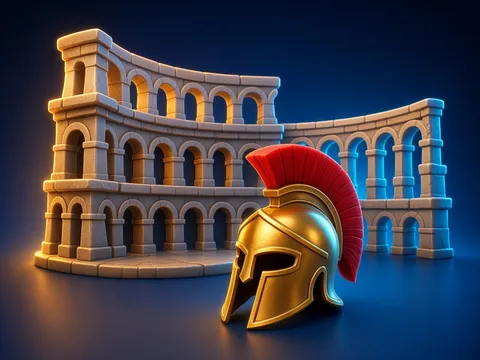
Ancient Rome grew up on the Apennine (Italian) peninsula, on the banks of the river Tiber. Legend says the city was founded in 753 BC by the brothers Romulus and Remus, and the Romans counted their years from that date. At first Rome was ruled by kings. In 509 BC the Romans drove out their last king and set up a republic. In Latin, “republic” means “the public thing”, “the people’s business”. In the republic power did not belong to one man: each year the assembly elected two consuls, who led the army and the state. The most powerful body was the senate, a council of former officials and members of noble families. At first power was held by the nobles, the patricians; ordinary citizens, the plebeians, won more rights after a long struggle, including the right to elect their own defenders, the tribunes of the people. Rome’s strength lay in its well-organised army of legions. The Romans conquered all of Italy and then, after long wars with Carthage, the lands around the Mediterranean. Conquest greatly increased the number of slaves in Rome. In 73–71 BC a great slave revolt broke out under the gladiator Spartacus; it was crushed, but it badly frightened Rome. In the 1st century BC generals began to fight for power. Gaius Julius Caesar, conqueror of Gaul, became dictator for life, but in 44 BC supporters of the republic killed him in the senate. His heir Octavian won the civil war, received the name “Augustus” from the senate in 27 BC and in effect became the first emperor: the republic gave way to the empire. In the 1st century AD Christianity arose in Palestine, an eastern province of the Roman empire. At first Christians were persecuted, but in 313 the emperor Constantine allowed them to practise their faith freely. The Romans built roads, bridges, aqueducts to carry water, baths and huge amphitheatres; the most famous is the Colosseum in Rome (opened in AD 80), where gladiators fought. Roman law, the Latin language and the Latin alphabet had a great influence on the later history of Europe, and many European languages grew out of Latin.
 What the book shows

In grade 6 the World History course covers the civilisations of the ancient East and West: Egypt, Mesopotamia, Iran, Great Turkestan, China, Greece and Rome. Read the topic in the textbook, look at the map, put the dates on a timeline and compare the civilisations with each other.
Textbook link:
This is not the textbook’s text but a short description of the topic. Check the exact page in your own textbook.
 The lesson step by step
- 1
Warm-up5 min
A stone amphitheatre and a helmet.
- 2
New topic10 min
From kings to the republic.
- 3
Practice10 min
Legions and Spartacus.
- 4
Game10 min
Empire and Christianity.
- 5
Wrap-up5 min
Reading a coin.
 Let’s understand
For the student Simple language
| Body | Who | What it did |
|---|---|---|
| consuls | two, for one year | led the army and state |
| senate | former officials, nobles | discussed laws and war |
| assembly | Roman citizens | elected officials |
| tribunes | chosen by plebeians | protected the plebeians |
 For the parent
How to help
- Hunt together for Latin roots in everyday words, such as “university”, “republic”, “calendar” and “aquarium”, and look up what they mean.
 For the teacher
 Lesson goals
- Explain how the Roman republic worked (senate, consuls, assembly) and describe the Roman army and conquests, the Spartacus revolt, the change to empire, the spread of Christianity and Rome’s legacy.
How to teach it
- Working with sources and maps, timelines, comparison tables, discussion
 Differentiation
- Weaker pupils work with key dates, names and pictures; stronger pupils compare civilisations and write their own conclusion
 Questions for the class
- What weakened the republic and turned it into an empire?
 How to check
The pupil explains how the Roman republic worked, puts the key events in order, and describes the change to empire and Rome’s cultural legacy.
 Scientific Scientific language
Roman concrete
The Romans made concrete with volcanic ash; some Roman buildings have stood for more than two thousand years.
All roads lead to Rome
Roman roads were so well built that parts of them are still in use today.
Self-study
Step by step
- I explained how the republic worked.
- I can tell patricians from plebeians.
- I described the change from republic to empire.
- I listed Rome’s legacy.
Going deeper
 Scientific language: for older students, parents and teachers.
Many countries today, including the Republic of Azerbaijan, are called republics; the word and the idea come from ancient Rome, though in modern republics all citizens have equal rights.
 Play and check
Republic or empire?
 How to write it down
- Draw a diagram of how the Roman republic was governed.
- Mark 753, 509, 73–71, 44 and 27 BC and AD 80 and 313 on a timeline.
- Write 5 achievements of Roman culture.
How the classwork looks in the notebook
Sample: the date and heading follow this country’s notebook rules.
 Watch out: common mistakes
 Where it helps in life
- Next: medieval history in grade 7
 At home
Core
- Give a speech in the Roman senate: what must be done to protect the republic? (5–6 sentences)
Extra ⭐
- Draw a Roman building (the Colosseum, an aqueduct, a road) and explain what it was built for.
How to do it
- Put the dates on a timeline.
- Retell the topic to a grown-up.
Answers for parents
In the republic power was shared and limited in time: consuls were elected for one year, the two checked each other, and the senate and assembly also took part in decisions, so no one man held full power.
Step-by-step homework solution — Show the solution (try it yourself first)
Working with a source
- A Roman coin shows two consuls seated side by side. What does it show? Power was given not to one man but to two elected officials, the key idea of the republic; the coin shows the state proudly spreading that idea.
How the homework looks in the notebook
Sample: the date and heading follow this country’s notebook rules.

 About cookies