


Architecture of Azerbaijan


 About this lesson
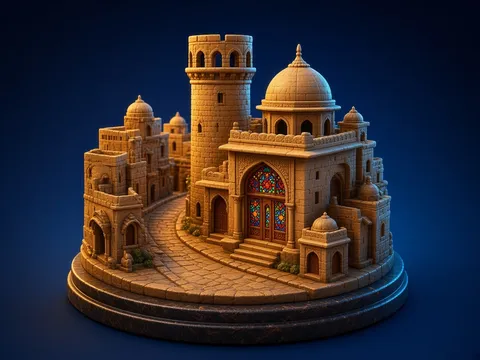
Architecture is the art of designing and constructing buildings; the person who does it is an architect. The Old City (Icherisheher) of Baku contains the Maiden Tower and the Palace of the Shirvanshahs (15th century); together they are on UNESCO’s World Heritage List. The Momine Khatun Mausoleum in Nakhchivan was built in 1186 by the architect Ajami Nakhchivani. The Palace of the Shaki Khans (18th century) is famous for its wooden windows with coloured glass, called shebeke; the wooden pieces are joined without nails or glue. Azerbaijani architecture often uses domes, arches and geometric patterns.
 What the book shows

In art lessons the child explores colour, line and shape, draws and creates patterns. Look at the textbook examples, then make your own work.
Textbook link:
This is not the textbook’s text but a short description of the topic. Check the exact page in your own textbook.
 The lesson step by step
- 1
Warm-up5 min
Photo tour.
- 2
New topic10 min
Who is an architect?
- 3
Practice10 min
Famous buildings.
- 4
Game10 min
Drawing features.
- 5
Wrap-up5 min
Paper shebeke.
 Let’s understand
For the student Simple language
| Monument | Where? | Famous for |
|---|---|---|
| 🏰 Maiden Tower | Baku, Old City | symbol of the city |
| 🕌 Shirvanshahs’ Palace | Baku, Old City | 15th-century palace complex |
| 🏛️ Momine Khatun Mausoleum | Nakhchivan | 1186, architect Ajami Nakhchivani |
| 🪟 Shaki Khans’ Palace | Shaki | shebeke windows |
 For the parent
How to help
- Find an old building in your town and look at its domes, arches and patterns together.
- Visit the Old City or a museum if you can.
 For the teacher
 Lesson goals
- Know what architecture is, recognise famous historic buildings of Azerbaijan, and draw architectural features (dome, arch, shebeke).
How to teach it
- Observation, drawing, colour mixing, a class display
 Differentiation
- Weaker pupils colour a ready outline; stronger pupils create their own composition
 Questions for the class
- How did old builders make buildings both strong and beautiful?
 How to check
The pupil names monuments and their towns and draws domes, arches and shebeke.
 Scientific Scientific language
Why are domes strong?
The rounded shape spreads the weight evenly, so stone domes stand for centuries.
Shebeke
Light through coloured glass throws colourful patterns into the room.
Self-study
Step by step
- I can name the building and its town.
- I recognise domes and arches.
- My drawing has a geometric pattern.
Going deeper
 Scientific language: for older students, parents and teachers.
Historic buildings tell a nation’s story in stone; protecting them matters for future generations.
 Play and check
Which town is it in?
 How to write it down
- Draw a dome, an arch and a shebeke pattern and label them.
- Draw a simple picture of one monument.
How the classwork looks in the notebook
Sample: the date and heading follow this country’s notebook rules.
 Watch out: common mistakes
 Where it helps in life
- Ceramics and embroidery
- Modern architecture
 At home
Core
- Make a “shebeke” window from coloured paper.
Extra ⭐
- Draw a building in your town and label its features.
How to do it
- Prepare a quiet spot and materials.
- Show your work to a grown-up and explain it.
Answers for parents
For the shebeke: cut geometric holes in black card, glue coloured see-through paper behind, and hold it to the window: light makes coloured patterns.
Step-by-step homework solution — Show the solution (try it yourself first)
Think
- When morning sun shines through a shebeke, coloured patterns appear on the floor, and they move as the sun moves.
How the homework looks in the notebook
Sample: the date and heading follow this country’s notebook rules.

 About cookies