


A pupil’s school day around the world
USA
How a pupil gets to school, what the classroom and timetable are like, what is taught and by whom, what they wear, what goes in the bag, and how they prepare and spend time after school.
How children get to school
- The yellow school bus is a symbol of the USA: many children ride it from a stop near home.
- Others are dropped off by car (the “car line” at the entrance) or walk.
- Adults usually meet younger children at the bus stop.
A typical school day
 Children arrive by school bus, by car or on foot; in many schools the day starts with a morning meeting.
 In elementary school one teacher teaches almost every subject, with long blocks for reading and math.
 Lunch in the cafeteria (packed or school lunch) and outdoor recess.
 Art, music, PE and library usually happen on set days of the week.
The classroom
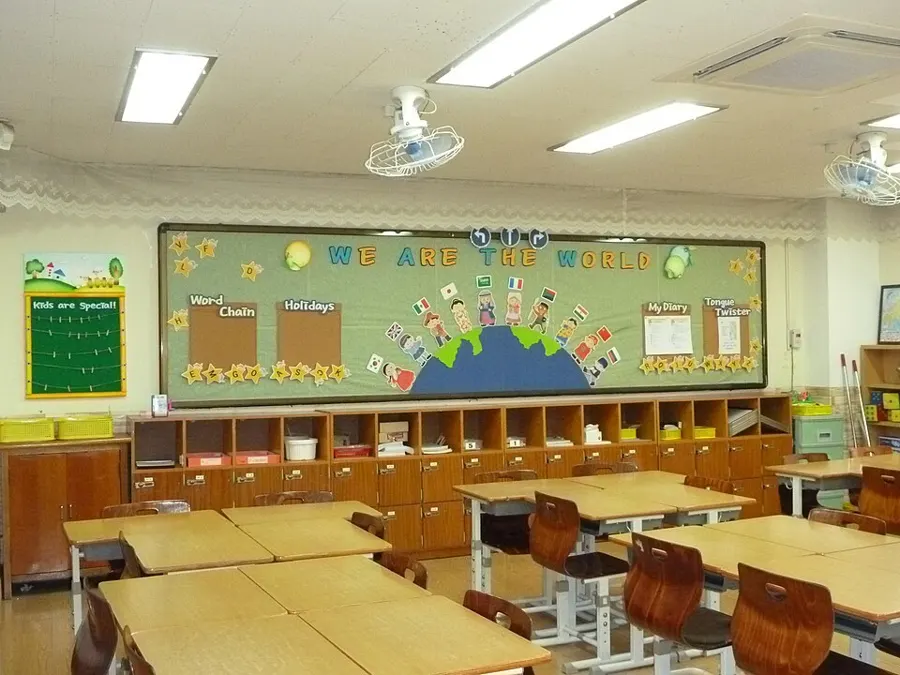
In elementary school children often sit at group tables; there is a carpet for whole-class time, a classroom library and learning centers. Most of the day is spent in one room.
Timetable and hours
The school year usually starts in August or September, depending on the state and district. The day is split into long reading and maths blocks, with lunch and outdoor recess.
An example day (varies by school)
- Morning meeting
- Reading and writing block (ELA)
- Lunch and recess
- Math block
- Science / social studies, then “specials”
What is taught and who teaches it
A homeroom teacher teaches almost all core subjects. Art, music, PE and library — the “specials” — are taught by other teachers on set days of the week.
Uniform and clothing
Most public schools have no uniform but do have a dress code; some public and many private schools require a uniform. The rules are in the school handbook.
Wear sneakers on PE days, and bring a jacket for the weather because recess is outdoors.
What to pack
Before school
- Check the folder for anything to sign.
- Know the bus stop time or the car drop-off routine.
- Breakfast (many schools also offer breakfast).
After school
- An after-school program or home.
- Read together every day; homework is usually short.
- Empty the folder and check what is on tomorrow.
After school: preparation and activities
- After-school programs: supervision, play and homework time at school or community centers.
- Preparation: short homework and daily reading (a reading log).
- Activities: sports teams, music, art, scouts.
What your child needs today
Every lesson page starts with a “For this lesson you need” box: check it and pack the bag the evening before.
These pages are general descriptions: each school sets its own timetable and dress rules.
 About cookies